It’s personal

“What do Lisa Olson and the Iraqi Army have in common? They both have seen Patriot missiles up close.” This notorious quote was uttered in 1991 by Victor Kiam, owner of the New England Patriots from 1988–1991.

On September 17, 1990, Olson was a reporter for the New York Daily News reporting on a New England Patriots practice. While interviewing cornerback Maurice Hurst, tight end Zeke Mowatt stood directly behind her naked and started making suggestive comments. Other players joined in.

Olson said the incident was nothing less than “mind rape”.

The NFL appointed a commission to study the incident. The commission found that the offenders were Zeke Mowatt, Robert Perryman, Michael Timpson, and the Patriots management. They were fined $47,000 in total. However, reportedly the money was never collected from the players.

Then came Kiam’s joke.

Olson was so rattled by this experience she moved to Australia—returning in 1998.

We’re told that sports journalism and journalism have evolved in many ways since then. Social media has been a “game changer,” allowing journalists to directly interact with their readers.

But for some women sports journalists today, social media has merely replaced the toxic locker room culture of the 1970s and 80s.

For Diana Moskovitz, a sportswriter for Deadspin, social media is a double-edged sword.

“I’ve gotten great story tips and received great feedback and help via social media, especially Twitter,” Moskovitz said. “I’ve also gotten some of my worst harassment on Twitter, on top of my own concerns about tweeting something that I shouldn’t in the spur of the moment.”

Moskovitz isn’t the only one.

Julie DiCaro, a freelance sports journalist, weekend host and update anchor for 670 The Score, and Sarah Spain, an espnW.com columnist, ESPN Radio host and SportsCenter Reporter for ESPN, have experienced online harrassment themselves.

They decided to take a public stand against the hatred.

Earlier this year, the two women partnered with Just Not Sports, a blog that talks about anything and everything related to sports, and created the hashtag #morethanmean. The campaign addressed how online trolls would make horrible comments online with the benefit of anonymity, but are too cowardly to say such comments in person.

“Make no mistake, these tweets are not meant to express disagreement,” DiCaro said in a Sports Illustrated article. “They are calculated to destroy, demean, and denigrate the women they target in a public forum.”

For sports journalists, men can make a statement with minor consequences, but if a woman stepped out of line, she is much more intensively scrutinized.

“Men get mean comments, too, but I think the context of it is quite different for women,” Spain said in a New York Times article. “It’s not just, like, ‘You’re an idiot, and I’m mad at you for your opinion, it’s: ‘I hate you because you are in a space that I don’t want you in. I come to sports to get away from women. Why don’t you take your top off and just make me lunch?’”

A 2014 Pew Research Study compared online harrassment rates between the sexes. “All women are more likely to be exposed to sexual harassment online (25 percent of women to 13 percent of men) and stalking (25 percent of women to 7 percent of men),” the study concluded

Trolls who make these comments don’t care about the specifics of the womens’ reporting. It’s about targeting them.

“Be it a conversation on heavy subject matter like violence and sexual assault, or a discussion of things as trivial as the Bears 3–4 defense, tweets like these are simply a part of my reality, nearly every single day,” DiCaro said.

This issue hits home personally, too.

Last year, I wrote wrote bi-weekly articles, ranging from game recaps to opinion pieces, for the Detroit Red Wings affiliate blog of a fandom-focused sports site called FanSided.

The week I wrote on the Red Wings versus New York Islanders games, the comments set the tone for my job I hope to turn into a career.

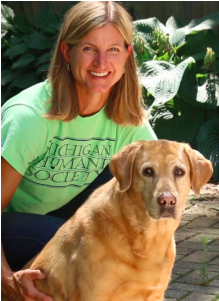
The picture on the left was my profile picture . It was simple and, I thought, professional. It seems that my appearance takes precedence over the content, and my gender stops me from saying certain things in this field.

For some women sports journalists, however, the situation is different. Either they don’t pay attention to the comments, or their work is rarely commented on.

Kacie Hollins, a sports reporter and anchor for WXYZ Detroit, counts herself as one of the lucky ones.

“I hear stories nonstop all the time and I’ve never had anything super horrific, I mean there’s some weird people out there but I’ve gotten like weird sort of fan mail and stuff like that but you’re always going to have people that insult you on social media,” Hollins said. “It’s hard for me to recall because if I’m being honest like I have to say you’re going to put in the effort to not let this stuff stick with you.”

Not paying attention seems to do the trick for Hollins. Maybe that’s the secret ingredient.

Research conducted by the City University London and the University of Huddersfield found that sports’ largely male audience is linked to the low numbers of women sports journalists.

The study raises the question of coverage imbalance. If women’s sports were covered more, would more women watch it?

Women sports journalists in positions of influence could push for more coverage of women’s sports.

According to the 2014 survey “The Status of Women in the U.S. Media,”, sports editor positions are nearly uniform in their maleness and whiteness.

Women sports journalists will not be going anywhere. They will continue to fight for  equality in the sports journalism world. Women will continue to make strides and hold more administrative positions in the future.

“[We have] all made great points on why its long past time to close the chapter on women sports reporters/entertainers as sideline eye candy and open the broadcast booth to the growing numbers of talented, skilled female commentators ready and itching for prime time,” Irish sports journalist Anne Doyle said in a Forbes article.

It’s a long road ahead and the only way to go is forward.

First of the year for many

What can make you feel light and airy to sudden change fiery rage? The GVSU Symphonic Wind Ensemble.

On Sunday, Oct. 16 at 7:30 p.m. at the Louis Armstrong Theatre on GVSU’s Allendale Campus, the ensemble, composed of students, conducted by Barry Martin, who made his GVSU ensemble debut, played a free concert.

The 490-seat auditorium was adequate, and unlike other halls. The venue’s lights were dimmed creating a subtle awareness of fellow audience members throughout the performance. It made focusing on the music alone harder than usual for some.

The music was challenging itself, also. Denise Finnegan, who played E-flat clarinet, said they had been practicing for this concert since the first week of classes.

The students who played wore all black. The women wore black from their own wardrobe with their hair down while the men looked more uniform with a black bow tie and white button down with a black jacket.

Instruments that were played included piccolo, flute, oboe, English horn, bassoon, E-flat clarinet, clarinet, bass clarinet, also saxophone, tenor saxophone, baritone saxophone, French horn, trumpet, trombone, bass trombone, euphonium, tuba, piano and percussion.

To start off the concert, the ensemble played “Fanfare for a Golden Sky” (2003) by Scott Boerma, “Colonial Song” (1911/1918) by Percy Grainger, “Symphony No. 6, Op. 69” (1958) by Vincent Persichetti and “National Emblem” (1906/1981) by Edwin Eugene Bagley, edited by Frederick Fennell.

The tone of the pieces varied from life blossoming like spring to wartime patriotism.

“We wanted the audience to grasp how diverse band literature can be,” Finnegan said.

The “Symphony No. 6, Op. 69” was the most compelling piece performed. It was comprised of Adagio/Allegro, Adagio sostenuto, Allegretto and Vivace. After each component, the conductor would take a brief pause with no applause from the audience then instruct the start of the next portion.

Usually after each piece the audience would applaud for a longer than usual time for a concert. Martin, the conductor, would stand to either side of the ensemble, silently mouth “thank you,” point his hand to the students then instruct certain students to stand who had solos during that piece, after which the rest of the ensemble would join in standing.

This showed the group and individual’s effort in performing such a masterful piece.

The conductor used big, smooth movements to instruct the ensemble members. The student to the right of the conductor distributed the music for each piece. In between each piece after the applause, the conductor would take the time to give feedback on certain things. He would use signals during the concert to instruct certain instruments to play louder or softer. During pieces that might have been more powerful, he would swing the baton enthusiastically.

Over half the seats were filled before intermission.

Once intermission started, the audience seemed unsure about what to do. Yet once the first person got up, others followed, heading for the door. About a third of the audience reconvened after intermission. It seemed some students were only there for an assignment and had what they needed.

During the second half of the performance, the ensemble played “Festive Overture, Op. 96” (1954/1965) by Dmitri Shostakovich, translated by Donald Hunsberger, “October” (2000) by Eric Whitacre, “Armenian Dances — Part 1” (1972) by Alfred Reed and “La Tregenda” (1884/1996) by Giacomo Puccini, edited by Robert E. Foster.

“We would love to spread awareness of the different musical genres, time periods, playing styles, and difficulties that music has to offer,” said Kelsey Wilcox, English horn.

The last piece, titled “La Tregenda” was exceptionally thrilling. Every moment of the piece left you on your toes. One moment the music recalled light breeze, the next a hurricane.

“The different instruments often have ‘musical dialogue’ with one another, that is to say when you are playing in different sections it is like having musical conversations – one group will play, while another one listens and then they can respond, and sometimes there are multiple conversations happening at the same time,” Wilcox said.

The ensemble was arranged in the standard semi-circle formation with the piano to the left and percussion in the back.

Certain members of the ensemble tapped their foot to the music while others stayed still. Some would rest their instrument on their lap while others would hold it on their knee when it was not their turn to play during a song.

When a particular piece was animated so were the students. Some would bounce their heads with their instrument, maybe wishing they could stand up and dance around the stage.

The concert lasted about an hour.

The work the students put in not only relates to the pieces they play but the real world.

“I just always hear people emphasize the team work that sports build, but in my opinion music is better because everyone comes out a winner, and as far as real world experience goes, working on a piece together is more like working on a project together in a real world job situation,” Finnegan said.

GVSU men’s rugby player brings military background to team

Many students discover what career they want to pursue during their first years in college, but there’s the few that have a different calling: the call to serve their country.

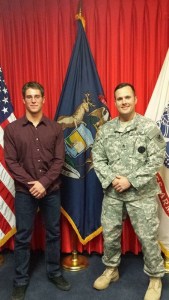
For Ben Serra, a member of the Grand Valley State men’s club rugby team, he knew from a young age the military was an interest.

“Everything I had became a gun like bananas were guns,” Serra said. “When I was in elementary school, my mom gave me a summer project to use our sandbox and build a replica of all the different battles from World War II or World War I.”

He wanted to enlist right out of high school, but wanted to make sure it was what he really wanted to do. He knew he wanted to pursue a professional career other than the military at some point in his life, so he decided to attend GVSU.

Serra began his first year at GVSU in the fall 2014 and he wanted to join some sort of club to be a part of the community. Rugby was it.

“From the first practice, I loved the atmosphere and the guys there,” Serra said. “It’s a great sport, I’ve loved playing it for a long time.”

He enlisted at the end of his first year in May 2015.

28760_rugby_rgb01f
Courtesy of Ben Serra

“My parents were very supportive in my decision,” Serra said. “They knew it was something I had always aspired to become a part of, and that it would be a huge benefit to me.”

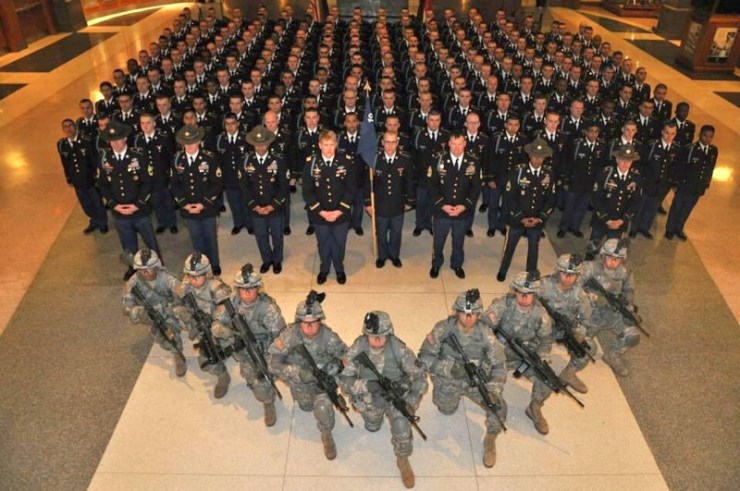
He was sent to Fort Benning in Georgia in mid-October of 2015 for his One Station Unit Training, which is basic training and infantry school combined.

“I saw it coming, it was a long process so I was able to get mentally ready for it, but it was still really strange,” Serra said. “It was two completely different worlds that I was in.”

While at basic training, they were usually called “warriors” since they’re not technically soldiers yet. But the sergeants still want to instill a sense of pride in them.

The days at Fort Benning were usually 17 hour days starting at 4:15 a.m. By 5 a.m. the beds were made, morning routines finished, and dressed for physical training. They completed some sort of physical training like running, upper or lower body, or abdominal exercises.

After physical training, they switched into their uniforms and headed to breakfast at seven a.m. Following breakfast, they got their gear ready for training. Training consisted of either heading to a range to shoot or practice tactics.

They ate lunch at the range and finished training around 4 p.m. Dinner was at 5 p.m. To end the day, they usually cleaned their weapons, completed classroom work or cleaned equipment for the next day. Lights out was promptly at 9 p.m.

“Along with Army tactics and customs, it taught me discipline, teamwork, confidence, physical toughness, mental fortitude, and critical-thinking skills that I don’t think I could have acquired anywhere else,” Serra said.

This training varied if there was something specific they needed to work on. The weekends warriors had off to rest up but they were not allowed to leave.

Serra completed training mid-February 2016 at the top of his class, which means he consistently put extra effort into making sure the platoon is taken care of, great physical training test scores and an understanding of the infantry’s role in combat.

Not only did he come back home to the friends made prior to camp, but he was leaving the ones he made at Fort Benning.

28759_rugby_rgb00f
Courtesy of Ben Serra

“Because you’re in such a stressful environment for so long and you’re living so closely with a lot of guys,” Serra said. “I have a couple friendships that are going to be definitely lasting friendships just because of that bond.”

Now Serra’s unit is the 1-125th Infantry in the Michigan Army National Guard. He has four and a half years left on a six year contract and still attends drill weekends once a month where they continue their training. For drill weekends, his home-station is either south of Grand Rapids at the Grand Valley Armory or Camp Grayling.

Training is at it’s all time high during the summer to prepare the men in the unit since it is most convenient for them because most are like Serra and in school. During the fall and winter, training slows down.

“It’s like a rebuilding time of the year for us,” Serra said. “Mostly just learning like military concepts, reacting to certain situations, a lot of medical stuff because that’s easier to train on during the winter.”

Since Serra has been back with GVSU men’s club rugby team, his changes haven’t gone unnoticed.

“The training has helped him in that he is very mentally tough and his conditioning is better than anyone else on the team,” said captain Cam Maher. “I respect and thank anyone who serves our country, but I’m extra proud that my friend has taken on this task.”

Even though Serra went through an experience such as this, he still remains the same person.

“He is always smiling, always working hard, helping his teammates without asking for anything in return,” said teammate Louis Ricard. “He is one of the most caring and giving people, and I am truly lucky to have him as a teammate, but more importantly as a friend.”

He made such an impact on the team, while Serra was away at basic training over the summer the team elected him as club president.

rugby-team
Courtesy of GVSU Men’s Rugby Facebook Page

“Rugby has been a very positive factor in my life,” Serra said. “Like most sports, it has reinforced the necessity of teamwork, communication, the benefits of being physically active, and it provided me a huge social opportunity.”

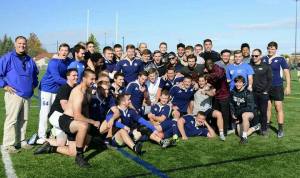
The team finished the season 6-1. They played their first game of playoffs at Illinois State University on Nov. 12 and lost 17-41.

“We didn’t play as well as we should have,” Serra said. “We made a couple mistakes but that’s something we’re going to grow from and hopefully capitalize on this next season.”

Going into the game, the team did not think their season would end.

“We knew they were going to be a tough team to face,” Serra said. “They’re very beatable and they just came to play and we had a tough time getting things rolling.”

At the end of the fall season, the team elects a new executive board to help run the team until the following fall semester. Serra was elected as the new captain.

“I feel like that’s more of what I want to do on the team,” Serra said. “I like being involved on the field and working on practices and rosters more than administrative paperwork and emails.”

Serra will be the one to greet new people that come to practice or people that visit the school that are interested in playing rugby.

Cam Maher, the last captain, was elected president. With the reversal of roles and being roommates with , Serra thinks it will only benefit the team

“We’re roommates so I mean we’re talking about rugby and what we want to do with the team daily so I think it’s going to be great,” Serra said.

While the competitive rugby season is only in the fall, the executive board meets a few times a semester to discuss administrative things like uniforms, finances, etc. The team uses group messages more often than not, Serra said it’s easier to communicate that way.

The team, also, has friendly matches in the spring to keep the guys in shape. They also use it as an opportunity to invite local high schools to come out and see what rugby is all about.

“We use it more as a recruiting tool and more of a scrimmage,” Serra said.

With all the new renovations and equipment on campus in the recreation center, the team finds new places in the winter to put in some work.

“We rent out the team weight room in the basement of the rec center one or two times a week and then with the new rec center, the renovation, it’s really easy for us to get a lot of guys in there lifting and on the track running,” Serra said. “We also reserve time in the Kelly Center to have actual practice probably going to have that two days a week.”

Serra has noticed that a lot of the players are taking their own initiative and hit the weight room on their own.

But Serra needs to work out more to stay in National Guard shape. His roommates keep him accountable and most of the time they join him.

“My freshman year when I was living with a guy who wasn’t playing rugby it was kind of tough to go to the gym every day or get up early and go for a run, but living with these guys, just being surrounded by that atmosphere and that motivation just makes it way easier on me,” Serra said.

Serra and the rest of the rugby team have a lot of ideas for this upcoming spring season and the following competitive fall season.

“We’re going to try to get things going a little bit earlier this year than we’ve had in the past just because I think it will give us a competitive edge on the field, take things more seriously, have more serious practices,” Serra said. “We’re going to try to have a more intense spring season this year.”

Serra plans to finish out his bachelor’s degree in Business Economics while finishing out his contract with the National Guard, where he could get deployed at any time.

Who let the dogs out?

Bustling streets, a popular bar scene, a variety of restaurants and art that accentuates the city. Downtown Grand Rapids is young, hip and on the rise. With such a youthful city culture, ArtPrize adds that extra pizzazz to draw people in.

According to The Art Newspaper, ArtPrize is one of the most-attended public art events in the world, attracting artists and visitors from around the world. It’s a 19 day festival of life and beauty. Art bleeds through the walls of every building downtown.

In 2016, ArtPrize hosted  1,453 entries in 171 venues, awarding over $500,000 in total cash prizes to the winning artists in each of several categories. In 2-15, over 438,ooo visitors attended the event.

Many artists hold public events at the venues displaying their work to attract attention.

Weatherly Stroh, from Birmingham, Michigan, hosted an event called “Yappy Hour” at the City Water Building where her piece, “300”, is displayed. It was a social evening for animal-lovers to drink and hang out with each other… and their dogs.


screen-shot-2017-01-31-at-10-42-44-am
Courtesy of artprize.org

Stroh wanted to raise more awareness of her work because the venue is a bit outside the central downtown area. She invited her friends on the West side of the state to attend, as well as the Humane Society of West Michigan. Volunteers from the Humane Society brought adoptable dogs to the social to showcase the available animals in the area.

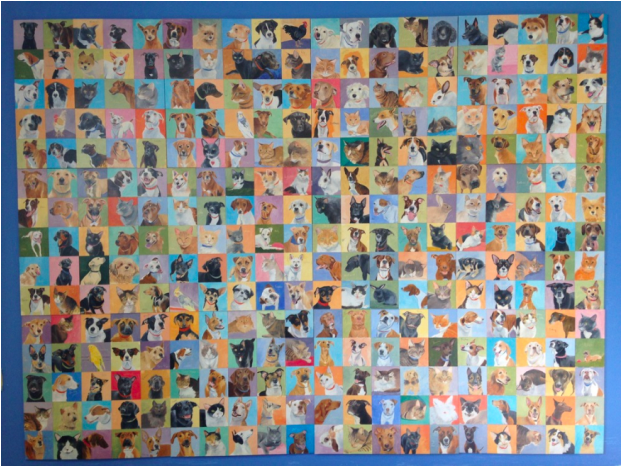
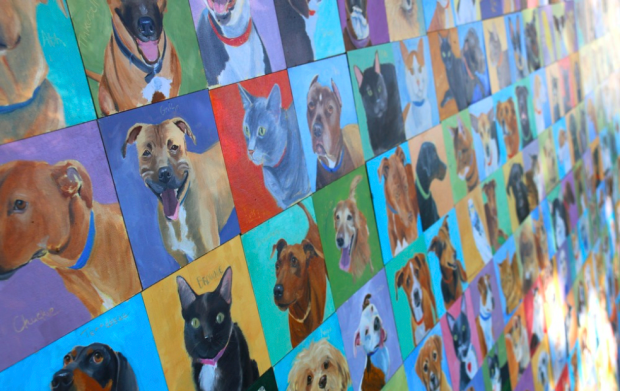
Stroh created “300” with small canvas boards with oil paint. The 300 individual paintings portray dogs, cats, birds, rabbits and roosters.

Stroh’s inspiration came from trips to the Humane Society of West Michigan (HSWM) and Michigan Humane Society (MHS), where she took photos of animals in the shelters to paint. Some photographs were submitted by HSWM volunteers who had adopted animals from the shelter.

“When I was taking the photographs, I would try to get them animated,” Stroh said. “But a lot of them are shy and nervous so I wanted to capture that too.”

The number three hundred was not chosen at random.

“I kind of picked a number that I thought would be manageable but also recognizing that wow, that’s a tremendous amount of animals that they have to feed and give veterinary care to, you know, passes through their doors on a daily basis,” Stroh said. “I kind of wanted to represent a snapshot of a day.”

The individual paintings were done for a reason, as well.

“There’s 7.5 million homeless animals in the United States and kind of just realizing how staggering that figure is and I wanted to I guess just help generate as much attention to that as possible,” Stroh added. “There’s so many wonderful, wonderful animals and they’re all sorts of breeds and my hope was to get people to adopt rather than buy.”

Painting animals can be quite difficult. To try to capture an animal’s personality through a photograph, let alone a painting, is challenging. But for Stroh, there’s one way to get it right.

“I typically start with the eyes because I think that’s the most important, it gives the window into their soul is what a lot of people say. I start there,” Stroh said. “It gets the rest of the painting off to a great start.”


Screen Shot 2017-01-31 at 10.43.36 AM.png
Courtesy of artprize.org

The paintings were not organized in a symmetrical way. Rather, the background and types of animal were randomized.

“I wanted people’s eyes to go searching through the whole piece,” Stroh said. “I didn’t want them to lock in on one background color or one type of dog.”

For Stroh, this piece was her biggest challenge yet. Her personal style of art is more realistic, but she strives to become more loose in her work. She said the size of the project was daunting.

“This was spread out over eight months,” Stroh said. “I just kind of had to keep persisting through even days when I was like, ‘Oh my god, I don’t feel like doing this’.”

In total, “300” took over 350 hours to complete. Each individual painting took 45 minutes to an hour to finish, Stroh said.

However, all the hardwork is for a good cause. Stroh donates a portion of her proceeds throughout the year from her portraits back to the humane societies.

After completing a feat like this, Stroh can see herself coming back to ArtPrize every year.

“I love the whole energy of Grand Rapids,” Stroh said. “I haven’t really spent a lot of time here other than for Art Prize and just has a really great vibe and being surrounded by creative people and there’s all sorts of interesting talks going on that it’s really fun to be a part of it.”

She already has some animal-related ideas for next year, but Stroh would not disclose any specific details.

Not only did she paint this piece, but kept up with her normal work of landscapes and animals.

Stroh started her full-time career in art back in 2010. But the direction of animals and landscapes started when a friend asked her to paint their recently deceased dog, Georgia. She had never painted dogs but was up for the challenge.

Screen Shot 2017-01-31 at 10.44.19 AM.png
Courtesy of artprize.org


“I love animals…they bring a tremendous amount of joy into my life and I think that people that connect with my paintings have similar feelings,” Stroh said.

She has her own dog, Kenai, who she adopted when she was two. She’s 12 now. During her time at ArtPrize, Kenai was staying with some friends.

“But I almost adopted a couple of the dogs that are on the wall,” Stroh said. “By the time I called, I had waited just long enough and they had been adopted, which was great.”

Towards the end of ArtPrize, a friend called Stroh notifying her she had made it to the Top 25. She also made it to the Top 5 for the Monroe North Hub.

“I think it validates that people understand my work and my message and gravitate to it,” Stroh said.

How two women became in ‘CHAARG’ of their lives

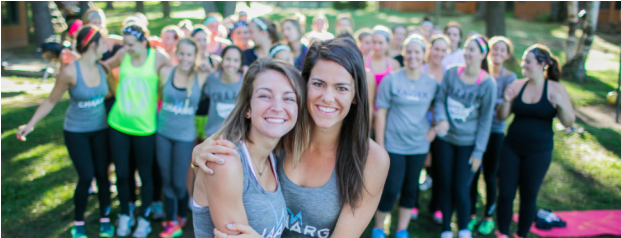
CHAARG [Changing Health, Attitudes + Actions to Recreate Girls] is a health and fitness organization for women. CHAARG is at over 40 universities in the United States and looking to go global.

As stated on the CHAARG website, “We are CHAARG and we’re on a mission to show college girls everywhere that owning your fitness is owning your life. We are liberating girls from the elliptical and proving that fitness can and should be fun.”

Each CHAARG chapter partners with a local group exercise studio once a week to lead a workout in a variety of styles, from CrossFit to boxing to Zumba.

CHAARG seeks to instill in its members that they more than just the chapter they signed up for, but a part of a larger community. To reach all the girls at every university, CHAARG requires every girl to create an “inchaarg” Instagram account to support and stay connected.  They promote girls to be their happiest and healthiest selves.

Everything starts as an idea and Elisabeth Tavierne, the founder and president of CHAARG, took a chance on something that turned into a career alongside Sarah Clem, the director of expansion.

Natalie Longroy: Do you think you’re living the dream?

Sarah Clem: Absolutely. 100 percent. I think that’s like a no-brainer. For me, at least.

Elisabeth Tavierne: Since I feel like, especially after weekends with CHAARG girls, ‘cause you know we are always kind of in the background not really with CHAARG girls in person a lot. So especially when you’re with them it’s just this CHAARG high that you feel.

So I woke up this morning and I was literally thinking, that’s so funny that you ask that, I was like I literally have the best job in the world. I hate even calling it a job because I feel like people say “job” and it comes with that negative connotation but it’s like our lifestyle. Our life is so much fun every single day and we’re so blessed to be able to do what we love and to work with girls who are all so amazing and have the most incredible stories.

NL: Tell me about your time at Ohio State, Elisabeth, and what inspired you to create this movement.

ET: I came to Ohio State actually on a swimming scholarship and so I swam my freshman year. It was pretty fun, practiced seven hours a day, which is crazy. Then sophomore year rolled around and, I don’t know, something was different. With swimming, and this has been ever since I was little, you don’t really get much breaks and that’s just the nature of the sport, you know, you lose that feel for the water so fast and so the longest breaks we have are probably about one week to two weeks.

So freshman year happened, we swim in the summer, we have about a two week break and then sophomore year swimming rolled around again and I just wasn’t happy. The training was really, really hard. It wasn’t new and exciting like freshman year and the entire team just had this kind of energy that was so draining. We were all so exhausted and, for me, I’ve always been a very happy positive person like I don’t want to live like this you know swimming isn’t my passion anymore and obviously I’m not going to be a professional swimmer.

It’s funny because all of us swimmers we would always say we can’t wait until spring semester senior year when we’re done swimming and it’s like no one should be living that kind of life you know you hear always college is the best four years of your life and so why are we waiting till senior year you know to be done with swimming and finally live that college lifestyle and so I was thinking about it for a while the possibility of quitting and I was like you know I’m gonna see how sophomore year turns out and I’m going to quit after that and me and my best friend kind have had that same pact.

It was actually during winter training I don’t know what it was but I just walked out of practice and quit and thinking back I cannot believe I did that. But it was just something that again just continued to bottle up inside me when finally I’m just like I’m ready I don’t want this life anymore I’m not passionate about it and I told my coach I was like you know what I really need a week to just think about this possibility of ending my swimming career and he supported it he was like you know what take this week probably thinking that I was going to come back but I didn’t and I didn’t know anyone. I only had swimmer friends at Ohio State and a girl I knew was like hey you should think about rushing sophomore year just to meet friends and so I ended up doing that and obviously my major was exercise science so I still loved working out.

After I quit swimming, hung up my towel, I went to the RPAC, which is the gym at Ohio State and that was my first time going there and that’s when I saw that huge divide, you know, the girls on the elliptical, the guys in the weight room and I remember it was just me and there was one other girl and I looked at her and we’re both like ‘we know what’s up like we are in the weight room’.

But it was just so weird like why are these girls just so unhappy on the elliptical and that kind of started the CHAARG movement. I started realizing I really wanna give these girls an opportunity to find their passion in fitness and that can be the elliptical, that can be the treadmill, but for a lot of people there’s something more that they want to try they just need to figure out what that is.  Now the weight room is filled with girls and it’s so incredible to see.

NL: Sarah, tell me about how you started it at UC.

SC: I actually went to Ohio State my freshman year and it wasn’t the place for me really. I ended up transferring to UC as a sophomore but I still had a lot of friends who were at Ohio State, including my best friend who was in Elisabeth’s sorority.

The summer after my sophomore year of college so my first year at UC, she told me about this thing called CHAARG and she was like you would absolutely love it, the girl who started it in my sorority is awesome, you should check it out.

They had a wordpress blog at the time. I was like okay, cool. I checked it out and was immediately in love with it and I saw the same divide at UC as well in our rec center. So I pretty much emailed her and I was like hey I’m gonna start this at UC like I’m so excited like just tell me what to do and I’m like gonna do it.

Elisabeth kind of pumped the brakes and was like yeah let’s meet up a few times first like get to know each other. We ended up getting coffee once and then at that winter break is when we went for it and started the UC chapter and never really looked back.

But it was definitely nerve wracking just like didn’t know something that was gonna be like working at UC as well but now you go back to the gym at UC and it is just absolutely crazy like girls really have taken over the weight room.

NL: Elisabeth, did you think that it would be more than just at Ohio State?

ET: I never expressed it outwardly to others but inside I did, yes.

NL: How has CHAARG changed your life?

ET: It is changing my life every single day. It was interesting because we were like joking around about a hashtag, #ChangedByCHAARG and I’m going through a really transformative time right now just with really challenging myself to grow and it’s just so easy to be so distracted by life. I feel like I’ve just been kind of running through life.

I’ve experienced a lot of amazing thing but it’s hard to celebrate those little things and truly feel those little things like you’re constantly looking for the next goal, the next milestone. I just really want to be present this upcoming year.

It’s interesting because I feel like I wasn’t changed by CHAARG because I was the one helping others be changed by CHAARG and I remember actually at the leadership retreat this past summer with the ambassadors, I literally cried to myself after the retreat and I’m like all these girls are changed by CHAARG, all these girls have this story. I don’t have a story, I’m not changed by CHAARG and it was really powerful and I think that’s kind of when I started thinking about my journey and how I want to grow, how I also want to be changed by CHAARG and not just be the person behind the scenes helping others because you know you can’t serve others on an empty vessel and that’s kind of how I’ve been feeling lately and so I am definitely changed by the girls in terms of very moved by them and they inspire me to be a better leader but I also am going through a journey where I wanna be changed by CHAARG and I know I will be if I allow myself to just continue to challenge myself and be still and not run from feelings and not be distracted.

NL: Sarah?

SC: I can definitely say that CHAARG has changed my life completely. When I transferred to UC, I had absolutely no direction and honestly for a long time I didn’t belong in college that it wasn’t the place for me and that’s a really scary thought. I just kept picking majors, I ended up changing my major six different times because I had zero clue. It wasn’t just minor shifts. I would go from like veterinary medicine to education. I couldn’t figure out what God’s plan was for me.

As soon as I started working with CHAARG like I did an internship after that first semester. It just clicked, okay this is what I think I’m going to do for the rest of my life and it wasn’t something that I was telling people outwardly about because I was kind of like well it’s only at two schools and I don’t really know this girl that well, I don’t want to freak her out that I’m planning on working with her forever. But I finally did gain that clarity and it took me a really long time before I finally changed my major to something that I was hoping I could apply to CHAARG.

I think it’s just really by God blessing me to have had that opportunity but I look back and I have no idea what I would be doing right now without CHAARG. It is my dream “job” and every single thing I would do. I don’t feel like I work ever. I think that has been completely life changing for me and it’s really pushed me outside of my comfort zone just in terms of like I always thought I would live in Cincinnati, be really close to my parents and now I’m in Chicago.

I’m open to going other places and it’s pushed me outside of my comfort zone and I continue to try to let it do that to me every day. I’ve tried a lot of new workouts too. I used to be a one-type workout person and now I actually enjoy other things.


NL: Do you think this will be your one and only job in your life? Do you want it to be?

SC: Personally, I would love it to be yeah! I don’t really know what else I would do. I joke with my parents because they’re like what would you do like if and I’m like well I would probably move back home with you. I have absolutely no clue so yeah I would love that.

ET: 100 percent.

NL: What’s next for CHAARG?

ET: I was just talking about this yesterday actually because someone asked, “What are your five year plans for CHAARG? What are your 10 year plans?” and I’m like can’t we just live in the moment, I love where we’re at, I love where we’re going. I know people love five and ten year plans and I support that but I don’t like looking that far in the future for CHAARG. We love looking based on a semester, based on a year.

We hope to go to 12 more universities this upcoming semester so we’ll be at 50 in January, which is crazy! We will share this with you but we also snapchatted it. So if we go global, which literally saying that is absolutely crazy we’re like if we go global in 2017, which is this upcoming year, we will get bolt tattoos so you can hold us accountable for that since this will be in your paper.

That’s the fun part about CHAARG is it really is an adventure and we do set goals a lot of them are of course chapter base where we want to expand to because our ultimate goal right now is really to get to every college in the United States and eventually the world but there’s so many goals beyond that. I really want to expand the post-grad community. We want to have an awesome Youtube channel. We want to have an app. You know, eventually CHAARG studios like we would love that as well.

There are so many possibilities and directions to go because as you know it’s not only a health and fitness organization, it really is a lifestyle organization. So just continuing to connect girls and create amazing experiences for them.

NL: I’ve looked at where we are, in terms of schools, and we really haven’t gotten to the West Coast. Why haven’t we gotten that far do you think?

SC: It’s kind of cool. We don’t put any like real effort into targeting schools so it’s all based on girls coming to us and saying, “Hey I want to bring CHAARG to my school”, which, you know, really causes I think a genuine kind of movement of people really wanting it there. It does take a lot longer because you probably don’t have a friend who goes to a school on the West Coast. If you do, I would love her contact information.

But kind of where we started in the Midwest, it’s slowly kind of spread. We are starting to do more where we’re actively thinking about schools we want to go to next, which has been really exciting. It’s like how do we connect with girls there who we’ve never met before, who maybe no one knows a girl at that school.

It’s been really interesting in thinking about that just because we know CHAARG will thrive out West especially since it’s doing so well in the Midwest where people are really conservative. This application we have, I believe we have three schools out West who’ve applied so it is definitely starting to spread out there and I think that will be something that we see in the very near future.

NL: What makes CHAARG different from other organizations like this?

SC: I think the biggest thing that differentiates us is honestly the community and how incredibly close girls are. I wish you could have been at the retreat this weekend. Hearing them first greet each other, I normally love to talk, but that is one of the few times in life where I have to be silent because you hear them say, “Oh my gosh, I follow you on Instagram! You are so inspirational!” and I was just sitting there like wow that is absolutely incredible and that is something that I think not a lot of other organizations have.

The girls are truly the kindest, most inspiring, positive people you can ever meet. I think a lot of groups, especially groups of women, it is not normal to be super nice and friendly. Nothing bad about those groups like we were both in sororities and I had a great experience but with CHAARG if you are caddy or not positive, that’s not the norm for the group and that goes across all universities. I think that you, as a GVSU student, if you went to at Ohio State it wouldn’t feel weird.

ET: So many girls have transferred schools, transferred CHAARG chapters and say the same thing, “It’s the same, it makes me feel at home.”

SC: And that’s something I think that it is just that really strong sense of community that is completely unique and is something that, I don’t know how it happened really, but it is been really, really cool to see just like you’re not just a part of, you know, GVSU CHAARG. You’re a part of 6,000 plus girls and it’s kind of hard to say that about other organizations, I think.

NL: What’s one brand you would like to work with that you haven’t worked with before?

ET: We have worked with almost every brand. We haven’t worked with Lululemon. I would love to work with them. Lauren and Jane.

NL: I’ve never heard of them.

ET: They’re from Australia, actually. They just came to the United States. I wanna say they’re only in California, maybe New York. Sweaty Betty is another one that is from London and they’re also amazing and they recently came to the United States. So some international brands would be really cool.

NL: Is there anything going into the shop soon that you could tell us?

ET: We will be having a bunch of new fall/winter apparel. We haven’t officially gotten this yet but we’re really hoping for hats like beanies. We want CHAARG beanies. It’s so crazy because so many companies sell out of them like crazy really, really fast. A lot of companies do beanies. But we are crossing our fingers and hoping. We’ve had this designed for two years and we can’t get enough inventory. But yeah, we’re really hoping for that this year.

NL: What do you tell people when they ask you what do you do? This isn’t like your normal job like you said, it’s not work. 

ET: We typically are like oh gosh. We always say we work for CHAARG, it’s like a health and fitness sorority because I feel like a lot of people can understand what a sorority is and they obviously understand “Oh health and fitness, they must be doing something with college-aged girls”. But then if they ask for more information, of course, we tell them everything.

NL: What do you do on a daily basis?

ET: It’s different every day. No, we’ve started to kind of get more in a routine. I mean, Sarah works a lot with the chapters, with the CLCs, working on expansion. I do a lot of the events so right now of course planning the fit plan and planning CHAARGmas. Then Teresa, who is the other full-time lead, she does a lot of the blog, website, and then also helps me with the fit plan for photography needs and things like that.

But it’s fun because there always is something different. We work with our virtual assistants a lot and they are all amazing. We’re so thankful for them. Now we do have some in person interns so Kim who is sitting at our table right now, she manages the CHAARG shop and so she’s heading to the storage unit and shipping out a lot of things today because there were 350 girls who earned 50 bolts. I was thinking it would be 50 because that was a hard challenge, you had to do it with someone. I was in shock